
Global warming has exceeded 1.5C , a threat to food security and Biodiversity.


By Raphael Banda

(Journalism Trainer/Journalist

bandaraphael55@gmail)


Journalists and other stakeholders need to increase climate change awareness to preserve food security and biodiversity loss globally.
 

In the recent past most parts of the world have witnessed high temperatures, prolonged dry spells and flashfloods, with Zambia not being exception. This is threatening national food security, causing immense damage to infrastructure and impacting economic activities.


A week ago , the European Union (EU) Climate Change Service disclosed that for the first time, global warming has exceeded 1.5C across an entire year. The situation calls for increased public sensitization, awareness and doubling of efforts to cut down greenhouse gas emissions to slow down the unfolding climate crisis. It is also crucial that African countries highly impacted by climate change begin to access the loss and damage fund to address their peculiar areas of concern.


Zambia and other developing countries  need cushion to deal and recover from the resultant impact of the El Nino climate pattern which has brought high temperatures, drought, floods, loss of food crops, reduced hydro power generation capacities, escalation in disease out breaks, damage to infrastructure, reduced economic growth etc.


The EU Climate Service has indicated that global temperatures during the period from February 2023 to January 2024 reached 1.52C of warming Influenced by the El Nino weather partner. Limiting global temperature rise to below 1.5C as per the 2015 Paris agreement is crucial to curtail the most damaging impacts of climate change as seen through floods, droughts, heat waves, wildfires, tropical storms etc.


It is now widely agreed that human activities primarily burning fossil fuels which release planet warming gases like carbon dioxide are behind the rise in global temperatures with scientists stressing that despite this first year-long breach not breaking the 2015 landmark Paris agreement, it does bring the world closer to doing so in the long-term.

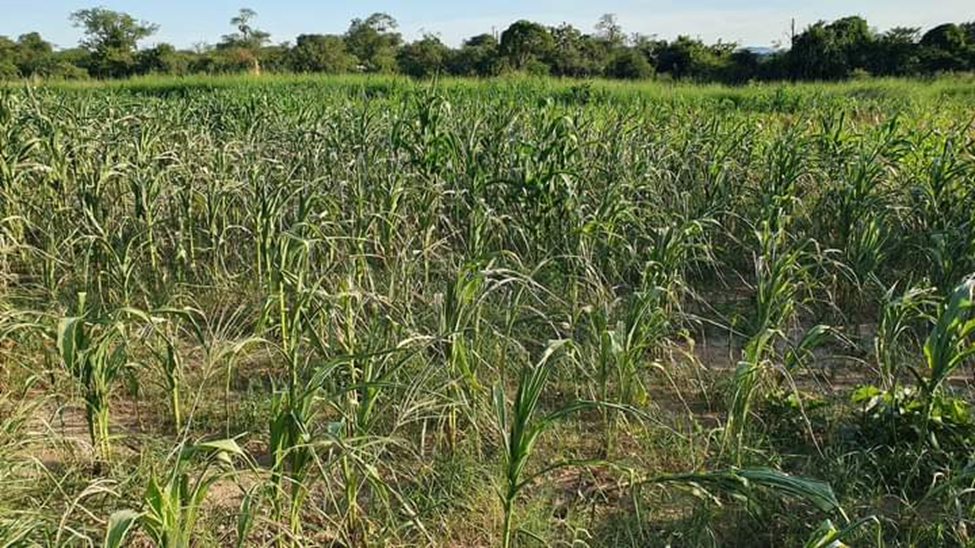
Several farmers in Zambia are having their crop fields drying up due to the pro-longed dry spell which the country is experiencing. But this calls for concerted efforts in fighting the hash effects of climate change on the Agriculture, Health, and Infrastructure sectors.

Ends//


Comments

Post a Comment

Popular posts from this blog

Climate Justice Demands More Than Promises: Why COP30 Must Deliver Finance

  Climate Justice Demands More Than Promises: Why COP30 Must Deliver Finance The Global South emits a fraction of the world’s carbon, yet suffers most of the damage. From Zambia to across Africa, communities are adapting with limited resources. Climate finance is overdue and the media must be part of the solution. Zambia is among many countries in the Global South feeling the disproportionate weight of climate change. In 2024, the nation faced one of its worst droughts in decades, dragging down the economy and affecting 87 of its 116 districts. Yet Zambia, like much of Africa, contributes just about 4% of global greenhouse gas emissions. This contrast, low emissions but high vulnerability, underscores a fundamental injustice in the global climate debate: climate finance is not keeping pace with the scale of the crisis. As the world prepares for COP30 in Belém, Brazil, in November 2025 , climate finance must take center stage. For three decades, leaders have met annually in the Blue...

Effort Required to Attain UNSDGs in the Next Five Years at 2025 UNGA

  Much Effort Required to Attain UNSDGs in the Next Five Years By Raphael Banda This year’s 80th Session of the United Nations General Assembly (UNGA)  opened on Tuesday, September 9, 2025, with the High-Level General Debates scheduled for  tomorrow Tuesday, September 23, 2025. The session marks a decade since the adoption of the 2030 Agenda for Sustainable Development, which set the Sustainable Development Goals (SDGs). On September 25, 2015, the UN General Assembly adopted Resolution 70/1, establishing the 17 SDGs and 169 associated targets aimed at achieving sustainable development by 2030. The agenda outlines ambitious but vital priorities such as ending hunger, reducing poverty, and creating sustainable cities and communities. Now, with only five years remaining before the 2030 deadline, countries must take deep reflection on the progress made and reposition strategies to accelerate achievements. While the world has faced numerous calamities and shocks incl...

The Post-Harvest losses ,danger to food security

      THE HUMAN COST OF POST-HARVEST LOSSES IN ZAMBIA By Raphael Banda The 2024/2025 farming season, brought a lot of jubilations to farmers and the general citizenly across Zambia due to the bumper harvest the country recorded. This bumper harvest recorded which is described by many as ‘ a blessing and restoration of food security’ comes barely few months after the country suffered the toughest drought in living memory. The farmers’ and people’s fixed smiles, were also witnessed during the 2025 (97) Agriculture and Commercial Show which took place on the 4 th of August in Lusaka, Zambia. In as much as we appreciate farmers (writer inclusive), we need to reflect on how we handle and fight post-harvest loss at the individual and national levels. Thousands of farmers across the country of the atleast 2.5 million registered are experiencing devastating reality (post-harvest losses) that eat our food security and income. A good portion of hard-earned crop is ...